At a Glance
- What it is: MGCIS is a universal healing system that parallel-codes myth-based narrative and narrative-music healing alongside each country's diagnostic and billing systems. It is designed to run on one engine and 30 modules.
- What is different: It is designed to measure each of 22 limitations of existing systems (diagnostic reliability, 19.7% dropout, the treatment gap, and others) with a dedicated verification indicator.
- How it is used: A cycle of scope screening → grade assessment → narrative and music prescription → outcome measurement → international sharing → recommendation update.
- Who pays: Insurance (10 modules) is one of four funding channels; the remaining 20 modules can run now on public budgets, institutional contracts, and self-care.
- Where it is heading: Toward registration as a WHO-FIC related classification over about four years, building evidence in the order of reliability studies → pilots → randomized controlled trials.
- What is needed now: First clinical data. A classification reliability study and a first pilot are the next steps (Section 6).
ICMZ is a complementary healing layer that is coded in parallel alongside each country's diagnostic and billing systems without changing them. This document fills gaps in the earlier five-stage document design, and sets out an evidence-building pathway aimed at registration as a WHO related classification, together with a sharing and feedback system through which user countries pool data to improve healing outcomes jointly.
Vision: A Universal Healing System for All Humanity
MGCIS is not a system of any single country or culture. It aims to be a universal healing system through which every person can name their own suffering and find a path to recovery. Universality is built in three layers.
| Layer | Meaning | Mechanism in this document |
|---|---|---|
| Universal structure | Stories of loss, betrayal, power, descent, and rebirth appear in the myths of every civilization | ICMZ concepts and the seven stages of the Kyklos (Sections 0 and 2) |
| Local expression | Each person meets the same structure through their own myths, language, and music | 10 cultural spheres, 8 languages, client choice of cultural sphere, fairness principles (Section 5) |
| Shared verification | Universality is not asserted but demonstrated by measuring together across many countries | ICMZ Outcome Set, international sharing and feedback, outcome comparison by cultural sphere (Sections 0, 5, and 7) |
Universal structure, local expression, shared verification. Every person heals through the stories of their own culture, and every healing becomes wisdom for all of humanity.
"Narro ergo fluo atque sum nos" — I narrate, therefore I flow, and indeed I am we. Every design in this document is an effort to extend the "I am we" of this motto to all of humanity.
0. Identity and Strengths of ICMZ: A Myth-Based Narrative Clinical Healing System
ICMZ is a third category, neither narrative medicine nor a diagnostic classification. It is a myth-based narrative clinical healing system that names suffering through mythic archetypes and sets out a healing pathway through a seven-stage cycle.
| Aspect | Narrative medicine (Rita Charon, Columbia University) | DSM-5-TR / ICD | ICMZ |
|---|---|---|---|
| Starting question | How do clinicians listen and respond to patients' stories? | What disease or disorder is present? | What mythic structure does this suffering have, and how does it flow toward recovery? |
| Core focus | Clinicians' narrative competence (attention, representation, affiliation; close reading) | Disease and disorder categories | The archetypal structure of suffering and the healing pathway |
| Language resources | Literary works and patients' stories | Symptom criteria | 53,580 concepts drawn from myths of 10 cultural spheres, world literature, historical figures, and war decision-makers |
| Classification system | None (a method of education and practice) | Diagnostic codes | Six-pillar ICMZ codes |
| Healing pathway | No stage model | None (treatment is in separate guidelines) | Seven stages of the Kyklos + Pharmakon |
| Outcome measurement | Mainly qualitative | Whether diagnostic criteria are met | Movement across the seven stages + standard scales coded in parallel |
| Relationship to existing systems | Complement to medical education and practice | Standard | Complementary layer coded in parallel alongside billing systems |
In all submissions and papers, ICMZ is not introduced as "a branch of narrative medicine" or "a new diagnostic system"; it is defined by the fourth column of this table. Narrative medicine is respected as an adjacent field and cited separately in the references.
ICMZ Design Responses to the Limitations of Existing Systems
The strength of ICMZ lies in directly addressing 22 limitations already identified in existing U.S. and WHO systems. Strengths are measured, not asserted. Each response has a verification indicator, and these indicators become the outcome indicators of the trials in Section 6 and the sharing network in Section 7.
| # | Limitation of existing systems | Established facts | ICMZ design response | Verification indicator |
|---|---|---|---|---|
| 1 | Some categories have low diagnostic reliability | In the DSM-5 field trials, kappa was about 0.3 for major depressive disorder and about 0.2 for generalized anxiety disorder | Inter-rater agreement for concept assignment measured and published from the outset; deterministic mapping engine | Kappa of 0.6 or higher |
| 2 | Heterogeneity within a single diagnosis; high comorbidity | Different symptom combinations are grouped under the same diagnostic label | Naming by the structure (archetype) of suffering rather than a symptom list; individual structure expressed as a combination of 1 primary + 2 secondary concepts | Differences in outcomes by concept type within the same diagnosis |
| 3 | Diagnosis does not indicate a recovery pathway | Diagnostic categories classify only the current state | Seven stages of the Kyklos + Pharmakon = current position and next task | Correlation between stage movement and scale improvement |
| 4 | Dropout from psychotherapy | Adult psychotherapy dropout rate of 19.7% (meta-analysis of 669 studies), about 1 in 5 | A 6–8 page report in the client's language, myths that sound like one's own story, narrative music between sessions | Dropout rate (parallel-coding group vs. control group) |
| 5 | Stigma of diagnostic labels | The label "disorder" can readily lead to self-stigma | Naming by universal experiences that heroes and gods also went through (universalizing suffering) | Change on an internalized stigma scale |
| 6 | Western-centered categories | Cultural concepts of distress remain at the level of appendices and interview tools | Concepts from 10 cultural spheres, link to the CFI, client choice of cultural sphere | Cultural fit ratings, dropout rate by cultural sphere |
| 7 | Treatment gap | Treatment rates below 10% in low-income countries and above 50% in high-income countries. Median workforce of 13 per 100,000 population (WHO 2025) | Stepped care, free multilingual dictionary and textbooks, self-care music | People reached, cost per person |
| 8 | Diagnosis, intervention, and outcomes recorded separately | ICD, procedure codes, and scales are not linked to one another | Linked in a single record through three-layer parallel coding | Record completeness |
| 9 | Only the individual is considered; perpetration and power structures lie outside classification | Classification addresses only the victim's symptoms | Callisto Dilemma (secondary victimization), Angelostrophe (anger directed at those who tell the truth), Kratopatheia (pathology of power) | Reduction in "my fault" attributions |
| 10 | Prevention gap | Those below diagnostic thresholds fall outside services | Stepped-care level 1 self-care, education and music, intervention at formative stages (Genesis, Auxesis) | Rate of deterioration in the below-threshold group |
| 11 | Insurers find it difficult to predict treatment duration and cost | Diagnoses have no progression stages | Stage-based expected pathways. Duration and cost estimation models published only after data have accumulated | Prediction error |
Additional limitations (12–22): meaning of recovery, relationships, groups, and practice
| # | Limitation of existing systems | Established facts | ICMZ design response | Verification indicator |
|---|---|---|---|---|
| 12 | Medicalization of normal suffering | After DSM-5 removed the bereavement exclusion for depressive disorders, debate over the pathologizing of grief has continued | Loss and grief addressed through the Demeter and Orpheus narratives and positioned as a stage in the cycle rather than as pathology | Rate of unnecessary diagnosis and medication referral |
| 13 | Difference between symptom remission and personal recovery | Recovery research treats connectedness, hope, identity, meaning, and empowerment (CHIME) as core | Kyklos mapped to CHIME (Anagnorisis = identity and meaning; Palingenesis = hope and empowerment) | Recovery process scale (QPR) |
| 14 | Absence of the dimension of meaning and existence | Diagnostic criteria count only symptoms | A meaning structure for every concept; the HAG "meaning structure" item | Meaning in Life Questionnaire (MLQ) |
| 15 | The client is merely the object of diagnosis | Clinicians assign classifications and clients receive them | Clients choose their own myth and rewrite their story through re-storying (co-authorship) | Shared decision-making ratings, therapeutic alliance scale |
| 16 | Lack of follow-up tools for relapse | Relapse after recovery is common in depression and other conditions | Self-maintenance after Palingenesis: My Myth Card, narrative music, follow-up at 3, 6, and 12 months | 12-month relapse rate |
| 17 | Intergenerational transmission and family systems lie outside classification | Diagnosis at the individual level | Family narratives analyzed through divine genealogies and the Epigonoi (intergenerational revenge); family sessions | Family functioning scale |
| 18 | Insufficient response to collective trauma (war, disaster) | Classification centers on individual illness. WHO emphasizes expanding mental health support in disaster response | Group narrative and music programs using Kratopatheia and war myths (stepped-care level 2) | Pre- and post-program scales for group programs |
| 19 | Therapist burnout and secondary trauma | Care for counselors lies outside classification and billing systems | Myths for counselors (Chiron, the wounded healer), supervision narratives | Professional Quality of Life Scale (ProQOL) |
| 20 | Low engagement among adolescents and the digital generation | Text-centered therapy feels distant to younger generations | The same myths delivered through music, games, and video (outputs of the five departments of the Mytho-Humanities School) | Engagement and retention rates by age group |
| 21 | Underuse of measurement-based care | Only a minority of clinicians use standard scales regularly | Scale entry made a condition for report generation: an incentive structure in which entering data produces the document | Scale entry rate per session |
| 22 | Research takes a long time to reach practice | The time for evidence to be reflected in care is often cited as 17 years | The feedback cycle in Section 7 distributes reviewed recommendations directly as versions (a learning system) | Time from discovery to adoption in practice |
These 22 indicators are grouped as the ICMZ Outcome Set. To insurers, WHO, and investors, the message is not "ICMZ is better" but "this limitation of existing systems is being measured with this indicator." Measured strengths cannot be refuted.
ICMZ Integrated Operating Flow
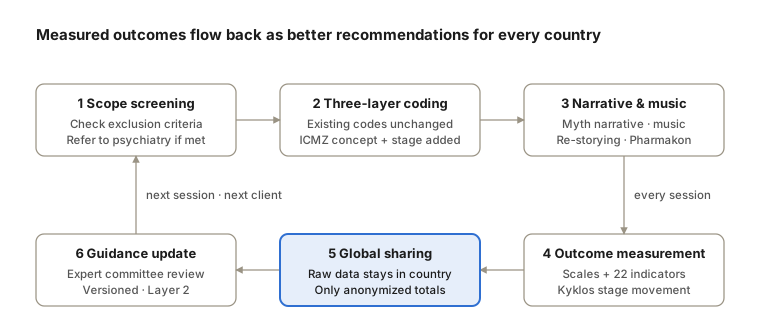
The six stages from screening to recommendation update form a single cycle; each stage is described in detail in Section 5 (screening), Section 2 (parallel coding and narrative music), Section 0 (outcome indicators), and Section 7 (sharing and updating).
1. Basic Principle: Parallel Coding, Not Replacement
Because a system that conflicts with the existing systems of the United States and WHO member states would be rejected, ICMZ does not change a single character of existing diagnostic and billing codes; it records the healing pathway alongside them in parallel.
ICMZ does not replace DSM-5-TR or ICD. It leaves each country's existing diagnostic and billing systems unchanged and adds a parallel healing pathway built on myth narrative and narrative music to improve therapeutic outcomes.
Parallel coding has four meanings.
- Billing stays the same: Diagnoses are billed with each country's billing codes, and treatment is billed under existing counseling and psychotherapy fee schedules.
- ICMZ goes in the record: ICMZ concepts and Kyklos stages are entered in the treatment-technique field and progress notes. This is the same place where a CBT counselor writes "CBT applied."
- Licensed clinicians bill: Only clinicians licensed in each country file insurance claims. ICMZ documents support that record.
- Effectiveness is shown by data: Progress data from cases coded in parallel accumulate to form the evidence for international approval.
2. Three-Layer Parallel Coding Structure
A single session record lists the diagnosis, intervention and outcome layers side by side, and in each layer the field used for billing is kept separate from the ICMZ parallel-coding field.
| Layer | Code used for billing (existing system) | ICMZ parallel coding (clinical record) | Corresponding WHO classification |
|---|---|---|---|
| Diagnosis layer | National diagnosis codes (ICD-10-CM in the United States, KCD in Korea, ICD-11 in adopting countries) | One primary ICMZ concept code + up to two secondary codes | ICD |
| Intervention layer | Procedure codes (CPT psychotherapy codes in the United States, national counseling fee schedules) | Narrative intervention applied (myth presentation, re-storying, Pharmakon task) + narrative music matched to the same stage | ICHI |
| Outcome layer | Validated scale scores (PHQ-9, GAD-7, PCL-5, WHODAS 2.0) | Position in the seven Kyklos stages, HAG (research use), Pyros grade (research use) | ICF (WHODAS 2.0 is ICF-based) |
The most important design point for international approval is that the three layers correspond respectively to WHO's three reference classifications (ICD, ICHI and ICF).
Integration of Narrative Healing and Narrative-Music Healing
As a principle, ICMZ interventions apply narrative and music together in a single context. Mythoiasis narrative music, matched to the myth concept and Kyklos stage addressed in the session, carries the same story forward in sound.
- Pairing: A piece of music is assigned to each concept and stage. For example, Katabasis (descent) is paired with a slow piece that helps endure the descent, Catharsis (purification) with a releasing piece, and Palingenesis (rebirth) with a piece about rising again.
- Within the session: The sequence is myth narrative presentation → narrative-music listening → sharing responses → re-storying.
- Between sessions: The client listens to the same piece as self-care and records responses in the Pharmakon journal.
- Recording: The track number, stage, listening context (in or out of session) and pre- and post-listening emotional self-ratings are recorded together in the intervention layer.
- Safety: The exclusion criteria (Section 5) apply equally to music. Pieces that may trigger traumatic memories are checked in advance, and the client can stop at any time.
- Billing: Music is recorded as a technique within an existing psychotherapy session. Billing music therapy separately requires a music therapist qualified in that country.
Information on which pieces drew good responses at which stages and in which cultural spheres is also gathered through the sharing and feedback cycle in Section 7, and music recommendations are updated accordingly.
Grade-Based Assignment of Narrative and Music Prescriptions
Once a client's grade is determined, the system assigns candidate narratives to read and narrative music to listen to, and these are delivered to the client after clinician approval. The higher the grade, the greater the share of short, more distant narratives, stabilization-focused music, and clinician accompaniment.
Grade determination: The Pyros four grades (Grade 1 mild to Grade 4 very severe, each with a, b, c and a direction of worsening, improving or plateau) are used, but the grade is always set by the clinician together with standard scales. For example, PHQ-9 has established bands of 5–9 mild, 10–14 moderate, 15–19 moderately severe and 20–27 severe, which serve as reference points for the grade. Because the Pyros grade is still being validated, it is not used on its own.
Prescription table by grade (initial standard, to be adjusted with data):
| Grade | Stepped-care level | Reading prescription (narrative) | Listening prescription (narrative music) | Amount and frequency | Assignment and accompaniment |
|---|---|---|---|---|---|
| Grade 1 mild | 1 Self-care or 2 guided help | Myth narrative for the primary concept + a 10-stanza, 40-line poem, and the relevant chapter of the textbook | Mythoiasis piece for the current Kyklos stage + a piece for the next stage | 3–5 times per week, 15–20 minutes each | System assignment, checked by facilitator or counselor |
| Grade 2 moderate | 3 Specialist counseling | Begin with more distant myths (other cultural spheres, symbol-centered); read together in session, then self-reading | Current-stage piece + Deep Calm relaxation and sleep pieces | 2–3 times per week, 10–15 minutes each | Delivered after counselor approval |
| Grade 3 severe | 3–4 Specialist counseling with concurrent psychiatric care | In session only; short symbolic narratives (half a page or less) | Mainly Deep Calm relaxation and sleep; narrative music in session only | One piece per session; self-directed tasks limited to music | Counselor accompaniment required; shared with treating physician |
| Grade 4 very severe | 4 Psychiatric treatment | Not assigned | Not assigned (treating physician may allow relaxation music only) | — | Re-screen after stabilization |
Conditions subject to exclusion (Section 5) receive no assignment regardless of grade.
Assignment procedure:
- Screening passed: Proceed only if scope screening and crisis screening have been passed.
- Grade determination: Grades 1–4 are set using standard scales + HAG + clinician judgment.
- Concept and stage decision: The mapping engine proposes one primary and two secondary concepts and the current Kyklos stage.
- Culture and preferences: The cultural sphere, language (of eight) and reading/listening preferences chosen by the client are applied.
- Candidate selection: Three narratives and three pieces of music with matching concept × stage × cultural sphere × grade tags are selected from the content library.
- Safety filter: Content whose trigger tags overlap with the client's trauma type is excluded. For example, a survivor of sexual violence is not initially assigned a direct version of the Medusa narrative.
- Clinician approval: The counselor selects from or replaces the candidates. Only Grade 1 self-care is delivered automatically, with later review by a facilitator.
- Delivery: "My myth of the week" and "My music of the week" are provided via app, website or print.
- Response recording: Before and after reading or listening, the client rates their state of mind from 0 to 10 and writes a one-line reflection in the Pharmakon journal.
- Re-evaluation: Prescriptions are adjusted every two weeks, and the grade is reassessed with standard scales every four weeks.
Automatic adjustment rules based on response:
| Signal | Action |
|---|---|
| State of mind worsens by 2 points or more after reading or listening, twice | Switch to more distant narratives or to music only, and notify the counselor |
| Crisis signal entered | Stop prescriptions immediately and switch to the crisis protocol |
| No reading or listening for two weeks | Switch to a shorter format (one stanza of a poem, one piece of music) and ask why |
| Steady improvement in state of mind + scale improvement | Proceed to the narratives and music of the next Kyklos stage |
| Grade increase | Switch immediately to the corresponding grade row of the prescription table above, and raise the stepped-care level |
Content library tags: All narratives, poems and music carry the following tags so that the assignment engine can select them.
| Tag | Example |
|---|---|
| Type and source | Myth narrative (glossary ‘Narrative’ entry), 10-stanza, 40-line poem (Mythopaideia), textbook chapter, Mythoiasis and Deep Calm pieces |
| ICMZ concept and Kyklos stage | Medousastrophe / Katabasis |
| Cultural sphere and language | One of 10 cultural spheres; 8 languages |
| Length | Reading minutes, track minutes |
| Narrative distance | 1 distant symbol · 2 close story · 3 re-storying of one's own story |
| Trigger warning | Violence, sexual violence, suicide, loss, war |
| Recommended grade | Grade 1 · Grade 2 · Grade 3 |
All assigned content and responses are gathered through the sharing and feedback cycle in Section 7 to learn which narratives and pieces were effective at which grades and in which cultural spheres. The amounts and frequencies in the prescription table are initial standards and will be revised annually using these data.
Record example (United States, post-traumatic stress, hypothetical case):
[Billing field — submitted to the insurer]
Diagnosis: F43.10 (ICD-10-CM)
Procedure: 90837 Psychotherapy, 60 minutes (CPT)

[Clinical record field — kept in the counseling record]
Treatment technique: Integrative narrative therapy, with ICMZ framework parallel coding
ICMZ concepts: Medousastrophe (primary), Callisto Dilemma (secondary)
Kyklos: transitioning from Katabasis → Anagnorisis
Outcome: PCL-5 58 → 41 (entered measured values)
The existing INS-ICMZ codes are not placed on claims; they are used only as internal reference numbers within the clinical record field above.
3. National Billing Code Conversion Table
For parallel coding to work, the ICD-11 codes in the 330 mappings must be converted once more into the codes each country actually uses for billing. ICD-11 came into effect in January 2022, but as of May 2024, 14 countries were actually reporting in ICD-11, and more countries are in transition.
| Region | Diagnosis billing code | Procedure and fee codes | Conversion priority |
|---|---|---|---|
| United States | ICD-10-CM (ICD-11 transition timeline not yet set) | CPT: 90791 initial evaluation, 90832·90834·90837 individual 30·45·60 minutes, 90846·90847 family, 90853 group | Priority 1 |
| Germany | ICD-10-GM | National fee schedule (EBM) | Priority 2 |
| United Kingdom | ICD-10 | OPCS-4 (hospital procedures) | Priority 2 |
| Japan | ICD-10-based disease names | Medical fee point schedule | Priority 2 |
| Greece and other EU | ICD-10 or national modification | National fee schedules | Priority 3 |
| ICD-11 reporting countries | ICD-11 (330 mappings used as is) | Country-specific | Already complete |
Conversion is based on official correspondence tables (WHO's ICD-10↔ICD-11 mapping tables, the US GEMs, etc.), and results are shown in documents only after review by local coding experts in each country. Conversion to the Korean KCD is kept for internal reference only, maintaining the existing principle of not submitting to domestic institutions.
4. Redesign of the Five-Stage Documents
The stages and page counts remain unchanged, and the 64-page Stage 5 document is changed from "insurance evidence material" to a **"Clinical Documentation Support document for parallel coding (Clinical Documentation Support)"**.
| Stage | Document | Length | Reader | Additions |
|---|---|---|---|---|
| 1 | Counseling briefing | 1–2 pages | Counselor | Add scope screening (Section 5), a validated-scale baseline field and a crisis-screening result field |
| 2 | Interim report | 7–8 pages | Counselor | Scale score trends recorded alongside HAG |
| 3 | In-depth counseling and final evaluation | Records | Counselor | Three-layer parallel-coding record for each session |
| 4 | Client report | 6–8 pages | Client | No change (strongest document) |
| 5 | Clinical Documentation Support document | 64 pages | Clinicians, reviewers, researchers | Restructured according to the table of contents below |
Table of contents of the 64-page document (64 pages in total):
| Section | Content | Pages | Data source |
|---|---|---|---|
| 1 | Cover and summary | 2 | Input data |
| 2 | Billing information summary (diagnosis and procedure codes, sessions, period) | 2 | Clinician input |
| 3 | Statement of medical necessity | 4 | Written by clinician; AI drafts only |
| 4 | Initial assessment (validated scales + HAG) | 6 | Measured scores |
| 5 | Treatment plan (goals, frequency, duration) | 4 | Clinician input |
| 6 | Session-by-session progress notes (based on 12 sessions) | 20 | Session records |
| 7 | Outcome trends (scale score tables and graphs) | 6 | Measured scores |
| 8 | ICMZ parallel-coding record (concepts, Kyklos movement, narrative music, Pharmakon) | 8 | Mapping engine + session records |
| 9 | Risk assessment and safety plan | 4 | Clinician input |
| 10 | Termination and follow-up plan | 3 | Clinician input |
| 11 | Appendix (methodology, scale descriptions, notices, signature fields) | 5 | Fixed text |
Number sourcing rules (rules to be built into the generator):
- All numbers in the document are taken only from entered data. If none exists, the field is left as "Not entered".
- What the AI does not generate: statistical significance, effect sizes, cost-effectiveness amounts, comparative figures against other treatments, and unverified literature citations.
- The former "cost-effectiveness analysis" and "clinical evidence report" sections are deleted, and the current level of evidence is stated factually in "ICMZ Methodology" in the appendix (pilot data collection in progress).
- Every page carries a footer notice stating that "diagnosis and billing decisions are the responsibility of the licensed clinician".
5. Safety, Ethics, Fairness and Privacy
Because international organizations and insurers check safety before effectiveness, five items are fixed in writing.
- Licensure principle: Only licensed clinicians in each country make diagnosis, billing and crisis decisions. Mythozoesis counselor certification is an additional competency and does not replace licensure.
- Crisis protocol: The system serves only an auxiliary role in alerting the counselor to crisis signals. It does not determine "no crisis", and the counselor checks directly in every case. An input field for a validated suicide-risk screening tool (e.g. C-SSRS) is provided.
- Consent: Separate consent is obtained for the nature of the narrative intervention, whether records are used for research, and the right to withdraw. Consent to research use is separated from consent to treatment.
- Privacy: US HIPAA, EU GDPR and Japan's APPI serve as the standards. Research data are collected only after pseudonymization, and myth concept codes must not become a means of re-identifying individuals.
- Cultural appropriateness: If a client does not want a particular myth or religious narrative, it can be replaced with a concept from another cultural sphere, or parallel coding can be turned off. The 10-cultural-sphere system is a strength in this respect.
Scope of Application and Advance Notice
Conditions that ICMZ cannot address are screened before counseling begins, and the client is informed in advance. For these conditions psychiatric treatment takes priority, and myth and symbolic narratives may instead reinforce symptoms.
| Condition | ICMZ application | Reason |
|---|---|---|
| Psychotic disorders such as schizophrenia and schizoaffective disorder | Not applied. Not applied even in the stable phase without the treating physician's consent | Risk that myths and symbols become mixed with delusions and hallucinations and reinforce symptoms. Antipsychotic treatment takes priority |
| Manic or hypomanic episodes of bipolar disorder | Not applied during an episode | Risk of reinforcing grandiose thinking and a sense of mission |
| Acute suicide risk or self-harm crisis | Stop immediately and switch to crisis intervention | Safety comes first |
| Severe cognitive impairment such as delirium or dementia | Not applied | Narrative work itself is difficult |
| Acute phase of substance intoxication or withdrawal | After detoxification and stabilization | Medical risk takes priority |
| Eating disorders with high physical risk | Adjunctive only, after medical stabilization and with the specialist team's consent | Physical risk takes priority |
| Children and adolescents | Only with guardian consent and the involvement of child and adolescent specialists | Appropriateness by developmental stage not yet validated |
Advance notice (included in the consent form):
Mythozoesis (ICMZ) is a complementary approach that adds myth-based narrative and narrative-music healing to existing care. It is not used for psychotic disorders such as schizophrenia, manic episodes, acute suicidal crisis, severe cognitive impairment, or acute intoxication or withdrawal; in these cases psychiatric treatment comes first. If such a condition is identified during sessions, ICMZ sessions stop and the client is referred to specialist care.
Screening is the first field of the Stage 1 briefing document; if a condition applies, no further documents are generated and only referral guidance is output.
Objective Fairness Across Ethnicities, Cultures, Regions and Histories
Because MGCIS is intended for people worldwide, it is designed with a structure that shows in numbers, rather than merely declares, that no ethnicity, culture, region or history is placed above others or pathologized.
Six principles:
- Equality of the 10 cultural spheres: No cultural sphere serves as the standard or the center of the archetypes. Ancient Greek naming is a shared scholarly nomenclature, like Latin scientific names in biology, and every concept carries names in eight languages together with corresponding stories from each cultural sphere.
- The client chooses: Cultural spheres are not assigned automatically by ethnicity or nationality. Giving Korean myths to someone of Korean descent or African myths to someone of African descent is a stereotype; the client's choices and responses decide.
- Name phenomena, not groups: Concepts are named after mythological figures and phenomena of suffering, not after ethnic, national or religious groups. No ethnicity becomes the name of a concept.
- History from multiple perspectives: Content dealing with war, colonialism and conflict, such as Kratopatheia and Historiopaideia, uses sources from both sides and addresses the psychological phenomena of power rather than blaming individuals.
- Respect for living faiths: Content dealing with gods and saints who are still worshipped today (e.g. Hindu and Shinto deities) is reviewed in consultation with the relevant tradition, and clients may choose to exclude it.
- Acknowledging the limits of grouping: Where a single cultural sphere contains many peoples, such as "Africa" or "the Americas", it will be divided into sub-spheres as usage data accumulate.
Measurable fairness audit (published annually):
| Audit item | What is measured | Standard |
|---|---|---|
| Representation | Number of concepts, content items and narrative-music pieces by cultural sphere, region and language | If coverage is skewed toward one cultural sphere, a reinforcement plan is drawn up |
| Outcome equity | Recovery, improvement and deterioration rates compared by cultural sphere, region, language, sex, age and income | If differences between groups recur, causes are investigated and addressed. Published only when each group meets a minimum size |
| Recommendation fairness | Whether the assignment engine gives certain groups shorter or less effective content | Ethnicity and nationality are not used as recommendation inputs. If differences appear, the engine is corrected |
| Scale validity | Whether standard scales are versions validated in that language and culture | Only validated translations are used. If none exists, forward translation, back-translation and local validation are completed before introduction |
| Sensitive expressions | Derogatory, stereotyping or colonial-perspective expressions in concepts and content | Reviewed by cultural-sphere advisors; reports answered within 30 days |
Data sovereignty of Indigenous and minority cultures: Stories and data of the Ainu, Ryukyu, Indigenous peoples of the Americas and others follow the CARE Principles for Indigenous Data Governance (Collective benefit, Authority to control, Responsibility, Ethics). The Institute works in partnership with the communities concerned, and the means of returning part of the benefit derived from their stories to the community is set out by agreement.
Equity of access:
- The glossary and basic materials are free; support programs for textbooks are maintained.
- Paid services apply tiered pricing by country according to World Bank income classifications.
- Support for low-spec devices, slow networks and offline use; accessibility features for people with disabilities (screen readers, captions) provided by default.
- After the eight languages, languages are added in order of user numbers (e.g. Arabic, Hindi, Portuguese, Swahili).
International Fairness Committee: Members are drawn evenly from WHO's six regions (Africa, the Americas, South-East Asia, Europe, Eastern Mediterranean and Western Pacific), and the chair rotates among regions. The committee reviews the audit above, operates a public channel for objections, and issues an annual fairness report together with the outcomes report.
6. Evidence-Building Plan
International approval requires two kinds of evidence: that "the classification is applied consistently" and that "parallel coding produces better outcomes." Work on the first can begin now.
- Classification reliability study (possible now): Two or more clinicians independently assign ICMZ concepts to the same set of hypothetical cases, and agreement (kappa coefficient) is measured. No patients are needed, and the study demonstrates the "mutually exclusive categories" that WHO-FIC requires.
- Reanalysis of existing cases (possible now): Applying ICMZ to published DSM and ICD cases can serve as evidence of "classification fit." However, it is not evidence of treatment effect, and papers and investment documents will state this distinction clearly.
- Clinical trial registration: Before recruiting participants, the plan is first registered with ClinicalTrials.gov or a registry linked to WHO ICTRP. The registration date becomes the official record of priority.
- Pilot (overseas partner institution): After ethics committee (IRB) approval, licensed clinicians code ICMZ in parallel with existing treatment and measure validated scales before and after. The aim is to confirm feasibility, safety and client acceptability; no claims of effect are made.
- Randomized controlled trial: "Existing treatment + ICMZ parallel coding" is compared with "existing treatment alone." As an add-on design fully consistent with the parallel-coding principle, it is also favorable for ethics review. Outcome measures are specified in advance from the ICMZ Outcome Set in Section 0 (scale change, dropout rate, stigma, cultural fit, etc.).
- Publications: Results are published in peer-reviewed English-language journals in the order reliability study → pilot → RCT. An application for US CPT Category III also requires these papers or an IRB-approved protocol.
First Pilot Design (Draft)
The aim is not to prove effect but to show that the approach is feasible and safe; these results will form the design basis for a randomized controlled trial.
| Item | Design |
|---|---|
| Study type | Single-arm pre-post feasibility study, pre-registered, IRB-approved |
| Site | One overseas partner clinical institution (with licensed clinicians on staff) |
| Participants | Adults with Grade 1–2 (mild to moderate) depression, anxiety or grief. Those meeting exclusion criteria (Section 5) are excluded |
| Modules | MCLIS and MGRIS profiles (or MHWIS clinician burnout) |
| Sample size | 30–50 participants (a size commonly used in feasibility studies) |
| Intervention | Existing treatment + 8–12 sessions of ICMZ parallel coding + grade-specific narrative and music prescriptions (Section 2) |
| Primary outcomes | Recruitment rate, completion rate (dropout rate), scale entry rate, client acceptability, number of adverse events and deteriorations |
| Secondary outcomes | Pre-post change in PHQ-9, GAD-7, WHODAS 2.0 and MLQ; Kyklos movement; response by content item |
| Duration | 2 months recruitment + 3 months intervention + 3 months follow-up after termination |
| Safety | Independent safety monitor, crisis protocol, stopping criteria defined in advance |
| Reporting | All results made public, favorable or not (including deterioration rate) |
Use and Ongoing Expansion of the 330 Clinical Mappings
The 330 mappings submitted to WHO (code, concept, clinical description, DSM-5, ICD-11; 19 DSM categories) have a case structure close to actual counseling content, making them the largest asset for building evidence now, without patients. However, because they are expert-constructed cases, they are used not as evidence of healing effect but as evidence of content validity and classification reliability.
Four uses:
| Use | Method | Evidence produced |
|---|---|---|
| Reference table for the mapping engine | Already in operation. The same case always yields the same result | Deterministic consistency |
| Content validity study | Six or more licensed clinicians rate the clinical appropriateness of each mapping on a 1–4 scale | Content Validity Index (CVI). Commonly used threshold: 0.78 or higher |
| Classification reliability study (Section 6, item 1) | Two or more clinicians independently map a sample of the 330 cases and compare results with each other and with the reference table | Inter-rater agreement (kappa) |
| Counselor training and certification | Practice casebook for the Mytho-Humanities School psychology department; certification exam items | Consistent application across counselors |
Ongoing entry and expansion method:
- Standardized entry form: All new mappings are entered using the same fields: mapping number, de-identified case summary, core symptom keywords (8 languages), ICMZ 1 primary and 2 secondary concepts, DSM-5-TR, ICD-11, ICD-10-CM, Kyklos stage, differentiation rule (why it is not a similar alternative concept), recommended grade, linked narrative and music, trigger tags, module, cultural region, validation status, and version and author.
- Codes only from the master registry: Codes are never created ad hoc during mapping. Concepts not in the registry are registered first. Mismatched codes would break the billing chain.
- Listing after review: The sequence is draft → review by two experts → differentiation rule finalized → incorporation into the engine. Validation status is shown in three levels: draft / expert-reviewed / field-confirmed.
- Regression testing: Each time a new mapping is added, the system automatically checks that existing standard cases (e.g., a man in his 50s whose son has died → G009 Niobeia Petrification/309.81/6B41) still return the same answer. If an answer changes, it is deployed only after review confirms the change was intended.
- Fill gaps first: Of the current 330, Kyklos stages are concentrated in Katabasis (about 150), while Acme has only about 10. Gaps by stage, by module (30) and by cultural region (10) are tabulated and filled first.
- Real counseling mappings flagged separately: Once the pilot begins, mappings of real cases obtained with consent are accumulated separately as "field cases." The rate of agreement between the engine's suggestion and the clinician's final choice becomes the engine's accuracy, and discordant cases become material for refining differentiation rules.
Expansion target (proposed): Adding 30 cases per month to reach about 700 within one year, with the number of mappings, category coverage, stage balance, content validity and engine–clinician agreement rate published quarterly. These figures serve as direct evidence of "quality and stability," a WHO-FIC registration criterion.
7. International Sharing and Feedback System
This is a federated structure in which each user country keeps its raw data within its borders and shares only pseudonymized, aggregated results. As more countries participate, the narrative recommendations received by clinicians in every country become more accurate.
Feedback cycle (returns to step 1 on completion):
- Recording: Clinicians in each country create three-layer parallel-coding records using a common data model.
- In-country storage: Raw data are kept only on servers in that country. This complies with cross-border transfer restrictions such as the EU GDPR.
- Aggregate sharing: Only pseudonymized aggregate statistics (or federated analysis results) are sent to the ICMZ Learning Network hub. Small cells with fewer than 10 cases are not disclosed.
- Analysis: The analysis examines which concepts and narratives appeared together with scale improvement in which diagnoses and cultural regions.
- Feedback: Results are reflected in the "next-session narrative recommendations" on clinicians' screens in each country. Changes to recommendations are reviewed by an expert committee and released with a version number.
- Expansion: New distress structures discovered in the field are submitted as Layer 2 (open extension layer) proposals and listed after review.
Common data model (all user countries record the same fields):
| Field | Content | Sharing scope |
|---|---|---|
| Case number | Country-specific pseudonymous ID | In-country only |
| Diagnostic code | National billing code + ICD-11 equivalent | Shared as aggregate |
| ICMZ concepts | 1 primary + 2 secondary, cultural region | Shared as aggregate |
| Kyklos stage | Position among 7 stages per session | Shared as aggregate |
| Validated scales | PHQ-9, GAD-7, PCL-5, WHODAS 2.0 scores | Shared as aggregate |
| Intervention record | Narratives used, narrative music (track number, response), Pharmakon assignments | Shared as aggregate |
| Background | Age group, language, number of sessions | Shared as aggregate |
| Verbatim counseling content | Client statements and notes | Not shared |
Governance:
- International Steering Committee: Composed of representative clinicians from user countries and the Institute; reviews recommendation changes and Layer 2 listings.
- National data stewards: The partner institution in each country is responsible for storage, pseudonymization and legal compliance for its own data.
- Data sharing agreement: Participating countries sign the same agreement and share only what has been approved by an ethics committee.
- Annual report: Aggregates by country and cultural region, and the history of recommendation changes, are published each year.
Associations seen in observational data are not causal, so promising concept–narrative combinations are confirmed through the trials in Section 6 before being adopted as standard recommendations. The network itself serves as evidence of "use in multiple countries" and "ongoing maintenance and revision," both WHO-FIC registration criteria.
Client-Participatory Measurement and Sharing
Healing effect, ICMZ's greatest strength, is designed to be measured not by clinicians alone but together with clients, with results shared among clients to help the next person heal. One person's recovery becomes the next person's map.
Measurement points:
| Timing | What | Who | Time required |
|---|---|---|---|
| Baseline | Standard scales (PHQ-9, GAD-7 or PCL-5 as applicable) + WHODAS 2.0 + HAG + meaning (MLQ) | Client, confirmed by clinician | 15 minutes |
| Every session | Ultra-brief scales (ORS, 4 items on life status; SRS, 4 items on session satisfaction) + Kyklos stage | Client | 2 minutes |
| After each reading or listening | State of mind before and after (0–10), whether it "helped," one-line comment | Client | 30 seconds |
| Every 4 weeks | Standard scales re-administered, grade reassessed | Client and clinician | 10 minutes |
| Termination | Same set as baseline + recovery process (QPR) | Client | 20 minutes |
| At 3, 6 and 12 months | Standard scales + relapse status | Client (app notification) | 10 minutes |
Outcome determination (same yardstick for every client):
- Reliable change: Determines whether change exceeds measurement error (Reliable Change Index, RCI).
- Clinically significant change: Examines whether the scale score has moved into the general-population range.
- Four outcomes: recovered · improved · no change · deteriorated. The deterioration rate is always published alongside. Reports that include only favorable results lose credibility.
My Healing Map (client screen): Clients view their own measurement results as follows.
- Where they are now among the 7 Kyklos stages (a single point on the map)
- The trend in scale scores in plain language ("The weight on your mind has lessened since you began")
- A list of the myths and tracks that helped them most
Seeing one's own change is itself a source of continuing motivation and serves as a mechanism to reduce dropout (Limitation 4).
Client-to-client feedback and sharing (all optional):
| Method | Content | What reaches other clients |
|---|---|---|
| Content rating | Clients record whether a myth or track they read or heard "helped" and their before-and-after change | Recommendations of "narratives that helped people at a similar stage and in a similar cultural region" (only aggregates of 10 or more people) |
| Recovery-story donation | At termination, clients anonymously donate their own re-storying narrative | After clinician review and de-identification, listed in the library as "narrative distance 2" (close narrative) content |
| Peer groups | Groups of people passing through the same concept or stage (e.g., "People passing through Katabasis") | Led under supervision by peer supporters with lived experience trained at the Mytho-Humanities School |
| Lived-experience advisory panel | Recovered clients jointly review recommendation changes, new content and screens | Design aligned with the client's perspective |
When a new distress structure appears repeatedly in donated recovery stories, it is submitted as a Layer 2 new-concept proposal. Clients become co-creators of the system.
Safeguards:
- People are not ranked or compared with one another. Comparison is only with one's past self.
- All shared posts and donated stories are reviewed before posting; if they contain crisis expressions, they are not posted and the responsible counselor is notified.
- Client stories from protected-tier modules (Section 9) are shared only within that module.
- Participation and donation can be withdrawn at any time; upon withdrawal, the content is removed from the library.
- Recommendation aggregates are not shown if based on fewer than 10 people, so that individuals cannot be identified.
The results of this measurement and sharing are published in an annual outcomes report covering recovery, improvement and deterioration rates, which becomes the actual evidence of ICMZ's healing effect to present to insurers, WHO and investors.
Open Innovation Operations: Rapid Adoption of New Healing Methods
When a new healing method is identified, anyone can propose it; it is piloted quickly according to its risk grade and adopted as standard once its effect is confirmed. "Immediate" applies in two cases: low-risk content is added within a few weeks, and anything found to cause harm is removed within 24 hours.
Entry points for proposals (all through a single public proposal channel):
- New research and clinical trial results (including international academia)
- Field findings from clinicians in user countries
- Patterns seen in clients' recovery stories and content ratings
- Promising combinations emerging from ICMZ Learning Network analysis
- Traditional healing narratives and music from each cultural region (reviewed by cultural-region advisors)
- New technologies (virtual reality, wearables, etc.)
Adoption pathways by risk grade:
| Grade | Examples | Pathway | Target timeframe |
|---|---|---|---|
| Low risk | New narrative music tracks, new myth versions and translations, donated recovery stories | Review → tagging → library listing → response monitoring | 2–4 weeks |
| Medium risk | New intervention techniques, prescription table changes, new module profiles | Safety review → pilot with consenting institutions and clients → comparison on outcome measures → adoption | 3–6 months |
| High risk | Methods affecting crisis intervention, medication or physical medical care | Outside ICMZ scope. Left to the judgment of the medical system under the parallel-coding principle | Not adopted |
| Safety correction | Content or rules with confirmed signals of harm or deterioration | Immediate removal → post-hoc investigation → notification to user countries | 24 hours |
Step-by-step flow: Proposal received (public; first response within 2 weeks) → risk-grade classification → pilot adoption → evaluation using the ICMZ Outcome Set (including deterioration rate) → standard adoption and versioned release → ongoing monitoring and withdrawal if needed.
What is open, and to what extent:
| Layer | Degree of openness | Reason |
|---|---|---|
| Layer 1 core concepts (50,092) | Fixed. Corrected only in the annual stable release | Classification stability required by WHO-FIC |
| Layer 2 extension concepts | Always open. Listed after review | New distress structures arising from the field and from clients |
| Prescription tables, protocols and module profiles | Revised quarterly | Reflect shared data and trial results |
| Content library (narrative and music) | Continuously added | Low-risk pathway |
| Engine access (API, FHIR) and tag specification | Open specification | External researchers, developers and partner institutions contribute in the same format |
Governance: An Open Innovation Committee (clinicians, researchers, people with lived experience, cultural-region advisors and ethics experts) makes decisions, and all proposals, decisions and reasons are kept as a public record. Members' conflicts of interest are disclosed in advance. Adopted methods are reflected in the same version in textbooks and counselor certification courses, so the field always works to the latest standard. Contributors are credited by name, and the Institute manages the system's standards and trademarks.
8. Future-Oriented Design
Over the next 5–10 years, mental health insurance and regulation are expected to move toward "paying for outcomes, connecting digitally, keeping AI under human oversight, and adapting to culture." By building these into the design before the changes arrive, ICMZ will already be a prepared system when they do.
| Coming change | Design to build in now | Benefit |
|---|---|---|
| Outcome-based payment: expansion of contracts that pay for results rather than number of sessions | Outcome reports that automatically combine Kyklos stage and standard scale change | ICMZ records serve directly as evidence in outcome-based contracts |
| Health record standard integration (HL7 FHIR); planned US transition to ICD-11 | Publish ICMZ as a FHIR code system, scales in LOINC, diagnoses dual-mapped to ICD-10-CM and ICD-11 | Fits into hospital electronic records like a plug-in. No rework at transition |
| Insurance coverage of digital therapeutic apps (Germany's DiGA: risk class I and IIa medical devices, 12-month provisional listing, proof of effect within a maximum of 24 months) | Combine mythocare self-reflection and Mythoiasis narrative music into a single self-care app and prepare a low-risk medical device pathway | First pathway to insurance reimbursement without a counselor |
| Medical AI regulation (EU AI Act: AI in medical devices is high-risk, with human oversight and logging obligations) | Keep mapping in the deterministic engine; AI drafts only; final judgment by the clinician; rationale and version recorded for every recommendation | No design change needed even as regulation tightens |
| Clinical workforce shortages and task-sharing (use of trained non-specialists, as in WHO mhGAP and PM+) | The stepped-care model below | Lower cost and greater access. The Mytho-Humanities School as a workforce source |
| Demand for culturally adapted care (DSM-5-TR Cultural Formulation Interview, CFI) | Link CFI results to concept selection across the 10 cultural regions | A place as a "culturally adapted tool" even within the US system |
| Growing acceptance of real-world evidence (RWE) | Design the Section 7 ICMZ Learning Network as a registry study from the outset | The network itself becomes an evidence-generating mechanism |
Stepped-Care Model
The same ICMZ concepts and narrative music are provided at different intensities according to the level of distress, and a client is moved up a level when signs of deterioration appear.
| Level | Target group | Provider | ICMZ delivery format | Payer |
|---|---|---|---|---|
| 1 Self-care | Mild difficulties, prevention | Self (app and website) | Self-reflection + narrative music + textbooks | Individual, employer benefits, future digital therapeutic app reimbursement |
| 2 Guided help | Mild | Facilitators certified by the Mytho-Humanities School (under licensed supervision) | Group narrative and music programs | Institutions, employers, communities |
| 3 Professional counseling | Moderate | Licensed counselor | Five-step documentation + three-layer parallel coding | Insurance (existing fee schedules) |
| 4 Psychiatric treatment | Severe; exclusion conditions | Psychiatry | Not applied, or adjunctive with the treating physician's consent | Insurance |
Anticipated Risks and Responses
| Risk | Response |
|---|---|
| Criticism of cultural appropriation in using minority-culture myths (Ainu, Ryukyu, Indigenous peoples, etc.) | Review by cultural-region advisors, attribution of sources, collaboration with the relevant communities |
| Religious objections | Clients can change cultural region or turn off parallel coding (Section 5) |
| AI errors and fabricated content | Deterministic mapping, numeric sourcing rules (Section 4), final clinician approval |
| Data breaches | In-country storage, pseudonymization, minimal collection (Section 7) |
| Dependence on the founder | Documented classification standards, International Steering Committee, annual stable release (e.g., ICMZ 2027.1) with published change history |
| Exaggerated promotion | Public communication principles |
9. MGCIS Integrated Design: One System, Thirty Modules
The 30 platforms are unified into a single system, MGCIS, and the existing platforms become its 30 modules. This translates the book's (Chapters 39–47) "one mirror, thirty rooms" into a system structure, so it does not contradict existing materials.
Confirmed Terms
| Term | Confirmed | Reason |
|---|---|---|
| Integrated system | MGCIS — Mythozoesis Global Care Integration System | Keeps the abbreviation investors and WHO already know. C is broadened from Clinical to Care to cover organizational, educational and public domains |
| Unit of composition | Platform → Module | A component of one system, not a separate system |
| Module code | Existing abbreviations kept (MNFSIS…MHRIS) | Continuity with the book and IR materials. The trailing IS is kept as a historical code |
| Clinical module | Existing platform MGCIS (clinical healing) → MCLIS | Avoids overlap with the umbrella name MGCIS |
| Standard list | Version in Chapters 40–46 of the book | The publication is the most official record |
| Domain | 7 domains = Chapters 40–46 of the book | Uses the book's chapter divisions as they are |
| Core Engine | ICMZ engine (Core Engine) | Screening, three-layer parallel coding, narrative music, outcome indicators, Learning Network |
| Parallel coding | Parallel Coding | Recording alongside, not replacement |
| Narrative music | Narrative Music (Mythoiasis) | Linked to Mythoiasis music |
| ICMZ Outcome Set | ICMZ Outcome Set (22) | The 22 indicators in Section 0 |
| Scope screening | Scope Screening | Section 5 |
| Clinical Documentation Support document | Clinical Documentation Support | The 64-page document in Section 4 |
| ICMZ Learning Network | ICMZ Learning Network | Section 7 |
Four-Layer Structure
- ICMZ engine: Concepts, screening, documentation, music, measurement and sharing used in common by all modules.
- 7 domains: Groupings of Chapters 40–46 of the book.
- 30 modules: Profiles within each domain (target population, additional screening, concept set, music set, outcome indicators, funding channel, referral pathway).
- 4 funding channels: Insurance billing / public and international budgets / institutional and corporate contracts / self-care and digital.
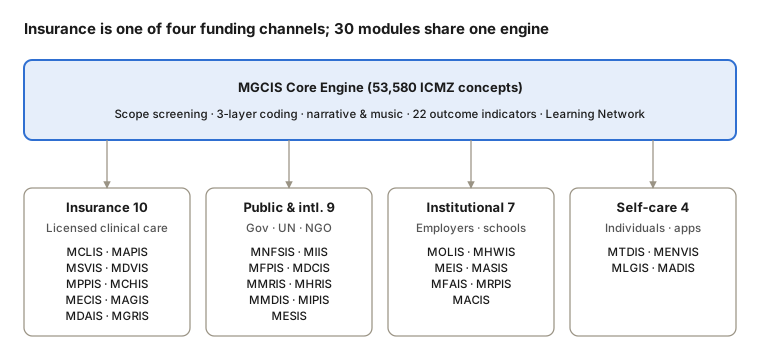
Even without insurance approval, 20 modules can operate now through public budgets, institutional contracts and self-care, and their usage record becomes the basis for insurance and WHO approval.
7 Domains × 30 Modules (Standard List)
A data grade of "protected" indicates a module whose data is legally stored separately with segregated access rights (see data partitioning below).
| Domain (book chapter) | Module | Target | Main funding channel | Data grade |
|---|---|---|---|---|
| Clinical and public safety (40) | MCLIS | Clinical healing (referral hub for all modules) | Insurance | Standard |
| Clinical and public safety (40) | MNFSIS | Narrative forensics and public safety | Public | Protected |
| Clinical and public safety (40) | MMDIS | Military and veterans | Public | Protected |
| Society and organizations (41) | MOLIS | Organizations and leadership (corporate EAP) | Institutional/corporate | Standard |
| Society and organizations (41) | MEIS | Education and schools | Institutional/corporate | Standard |
| Society and organizations (41) | MASIS | Sports | Institutional/corporate | Standard |
| Crisis and displacement (42) | MDCIS | Disaster and crisis | Public | Standard |
| Crisis and displacement (42) | MMRIS | Migrants and refugees | Public | Protected |
| Crisis and displacement (42) | MHWIS | Health workers and caregivers | Institutional/corporate | Standard |
| Crisis and displacement (42) | MRPIS | Religion and pastoral care | Institutional/corporate | Standard |
| Identity and relationships (43) | MLGIS | Sexual and gender minorities | Self-care | Protected |
| Identity and relationships (43) | MDAIS | Disability and accessibility | Insurance | Standard |
| Identity and relationships (43) | MADIS | Adoption and identity | Self-care | Standard |
| Identity and relationships (43) | MFPIS | Families of incarcerated people | Public | Protected |
| Identity and relationships (43) | MACIS | Arts and creative work | Institutional/corporate | Standard |
| Life course and loss (44) | MAGIS | Aging and older adults | Insurance | Standard |
| Life course and loss (44) | MGRIS | Grief and bereavement | Insurance | Standard |
| Life course and loss (44) | MPPIS | Perinatal care and parenting | Insurance | Standard |
| Life course and loss (44) | MECIS | End of life and palliative care | Insurance | Standard |
| Life course and loss (44) | MCHIS | Children and adolescents | Insurance | Protected |
| Social suffering (45) | MAPIS | Addiction recovery | Insurance | Protected |
| Social suffering (45) | MDVIS | Domestic violence | Insurance | Protected |
| Social suffering (45) | MSVIS | Sexual violence | Insurance | Protected |
| Social suffering (45) | MIIS | Incarceration | Public | Protected |
| Social suffering (45) | MESIS | Economic hardship and poverty | Public | Standard |
| New human suffering (46) | MTDIS | Technology and digital life | Self-care | Standard |
| New human suffering (46) | MENVIS | Environmental and climate anxiety | Self-care | Standard |
| New human suffering (46) | MFAIS | Celebrities and public figures | Institutional/corporate | Standard |
| New human suffering (46) | MHRIS | Human rights | Public | Protected |
| New human suffering (46) | MIPIS | International peace | Public | Standard |
Inter-Module Referral Chains (Linkage Effects)
Because a person's record sits within one system, the same myth carries the story forward as the person moves between modules. Client consent is obtained again at each move between modules.
| Chain | Flow | Linkage effect |
|---|---|---|
| Disaster | MDCIS → MCLIS trauma healing, MGRIS bereavement for families of the deceased, MHWIS care for rescuers | Victims, bereaved families and caregivers addressed together |
| End of life | MAGIS → MECIS → MGRIS | Continuous from before death through the family's grieving |
| Violence | MDVIS ↔ MSVIS ↔ MCHIS ↔ MPPIS | Intervention to break intergenerational transmission (Limitation 17) |
| Incarceration | MIIS ↔ MFPIS ↔ MNFSIS | Social reintegration and harm to families addressed together |
| Migration | MMRIS ↔ MHRIS ↔ MDCIS | Tailored with myths from the culture of origin (Limitation 6) |
| War | MMDIS → MCLIS, MIPIS | Through Kratopatheia, down to the causes of the wound (Limitation 9) |
| Generations | MEIS ↔ MCHIS ↔ MTDIS | From the prevention stage through music and games (Limitations 10 and 20) |
| Caregivers | MOLIS ↔ MHWIS ↔ MFAIS | Burnout prevention through the Chiron myth (Limitation 19) |
| Addiction | MAPIS ↔ MESIS ↔ MIIS | Addresses together the vicious cycle of addiction entangled with poverty and incarceration |
Data Partitioning and Operating Principles
- One logic, partitioned data: The 11 protected-tier modules are kept in a separate repository, accessible only to staff of that module. Only consented items pass to other modules.
- Safety rules live in the engine: Modules cannot switch off exclusion or crisis protocols. Protected modules add to their profiles each country's mandatory reporting obligations (child abuse, etc.) and trauma-informed guidelines.
- A module code is one field in the common data model: Myths and music shown to be effective in one module are recommended to other modules as well.
- Unified certification and training: The 90 qualifications are grouped into a "common qualification + module certification" structure, and the common textbook is the Mytho-Humanities School foundational textbook.
Launch Sequence
- MCLIS (clinical): The hub to which all modules refer. Already in operation.
- MHWIS (health workers): Employers pay, effects are easy to measure with a burnout scale (ProQOL), and risk is low.
- MGRIS (grief and bereavement): Has the highest fit with myth and directly answers Limitation 12 (medicalization).
- MOLIS (corporate EAP): Generates both revenue and a usage record without insurance approval.
- Protected-tier modules are opened one at a time after safety has been confirmed in the four modules above.
10. International Approval Pathway
The realistic route by which WHO formally recognizes an external classification is registration as a "Related Classification" in the WHO Family of International Classifications (WHO-FIC). The nursing classification (ICNP) and the primary care classification (ICPC-2) are included in this capacity, and it fits exactly the parallel coding principle of standing alongside ICD without altering it.
Related Classification registration criteria and ICMZ status:
| WHO-FIC criterion | ICMZ status | Actions required |
|---|---|---|
| Purpose: health information not covered by existing classifications | Healing pathways and narrative structure are absent from ICD, ICF and ICHI | A proposal that describes the gap precisely |
| Quality: hierarchical structure, mutually exclusive categories, stability | Six-pillar hierarchy and coding system in place; Layer 1 fixed | Demonstrate exclusivity through a reliability study (Section 6, item 1) |
| Accessibility: free, multilingual publication | Glossary free, in 8 languages | The classification itself remains free. Revenue comes from software, training and publishing |
| Sustainability: body responsible for maintenance and revision | The Institute exists | Publish the revision cycle and committee in writing |
| Use record: actual use in one or more countries | No clinical use record yet | Usage records from pilot institutions (Section 6, item 4) |
| Collaboration: willingness to align with the WHO-FIC Network | WHO dev11 #357P submitted | Prior consultation with one Collaborating Centre |
Registration procedure: The proposing institution submits to the WHO-FIC Family Development Committee (FDC) → committee evaluation → presentation and approval at the WHO-FIC Network annual meeting → recommendation by the WHO-FIC Council → publication by WHO. A World Health Assembly resolution is not required.
Parallel pathways:
- ICD-11 proposal platform: Proposes supplementary information on existing entries rather than new diseases. #357P will be strengthened in this direction.
- ICHI (International Classification of Health Interventions): Includes mental health interventions, and its clinical intervention section is finalized. A mapping table will be prepared showing where "myth-narrative-based psychological intervention" fits among existing intervention entries.
- US CPT Category III: Temporary codes for emerging health services. The service must be "currently performed on humans," and must additionally have one of an IRB-approved protocol or English-language peer-reviewed literature, among others. This is a target after the pilot is completed.
11. Phased Roadmap
About four years to Related Classification registration is proposed, and each phase must meet its passing criteria before moving to the next (durations are estimates).
- Phase 0 · Document preparation (now to 3 months): Revision of the 64-page generator, US billing code conversion table, parallel coding of validated scales, safety and consent documents, cleanup of the English edition, draft ICMZ FHIR code system.
- Passing criteria: zero fabricated numbers in generated documents; billing codes reviewed by local coding specialists.
- Phase 1 · Reliability and collaboration (3–9 months): Classification reliability study, securing one overseas partner clinical institution, clinical trial registration, prior consultation with a WHO-FIC Collaborating Centre, feasibility review of a digital therapeutic app pathway (DiGA, etc.) for the self-care app.
- Passing criteria: inter-rater agreement (kappa) of 0.6 or higher; IRB approval.
- Phase 2 · Pilot and first paper (9–24 months): Parallel coding pilot, submission of reliability and pilot papers, strengthening of #357P, ICHI mapping table.
- Passing criteria: no serious adverse events; pilot completed; at least one paper published or under review.
- Phase 3 · Application for approval (24–48 months): Randomized controlled trial, launch of the sharing and feedback network among user countries (Section 7), application for WHO-FIC Related Classification registration, application for US CPT Category III.
- Passing criteria: actual usage records from one or more countries; peer-reviewed papers; documentation of the revision and maintenance system.
Expert Review List
Before actual application, written confirmation will be obtained from experts in each of the areas below. The legal and regulatory content of this document is a design direction based on public sources and is not legal advice.
| Area | Reviewer | Items to confirm | Timing |
|---|---|---|---|
| Personal data | US and EU privacy lawyers | HIPAA and GDPR compliance, cross-border transfer, protected-tier modules | Phase 0 |
| Medical device and AI regulation | Digital health regulatory consultant | Whether the engine and apps are medical devices; EU AI Act and DiGA pathways | Phases 0–1 |
| Billing codes | Certified medical coding specialists in each country | Country-specific code conversion of 330 items | Phase 0 |
| Clinical safety | Psychiatrists and clinical psychologists | Exclusion criteria, crisis protocols, grade assessment | Phase 0 |
| Research design | Clinical trial methodology and statistics experts | Pilot and RCT design, methods for determining effects | Phase 1 |
| Ethics | Partner institution IRB | Consent forms, data use | Phase 1 |
| Culture | Cultural advisory committee members | Content review, sensitive expressions | Ongoing |
| Classification standards | WHO-FIC Collaborating Centre | Whether Related Classification criteria are met | Phase 1 |
Sources
- WHO Family of International Classifications (definition, criteria and procedure for Related Classifications)
- WHO — International Classification of Health Interventions (ICHI)
- AMA — Criteria for CPT codes (Category I and III)
- ICD-10 vs ICD-11: US transition status and country adoption figures as of May 2024 (citing WHO, secondary source)
- DiGA Fast Track guide (risk classes I and IIa, provisional listing 12→24 months)
- EU AI Act and AI in medical devices (high-risk criteria and application dates)
- WHO (2025) — Over a billion people living with mental health conditions
- DSM-5 field trial reliability (Scientific American)
- Swift & Greenberg (2012) meta-analysis of premature discontinuation in adult psychotherapy
CPT psychotherapy codes and national diagnostic coding systems are generally known information and must be verified against each country's latest edition before actual application.